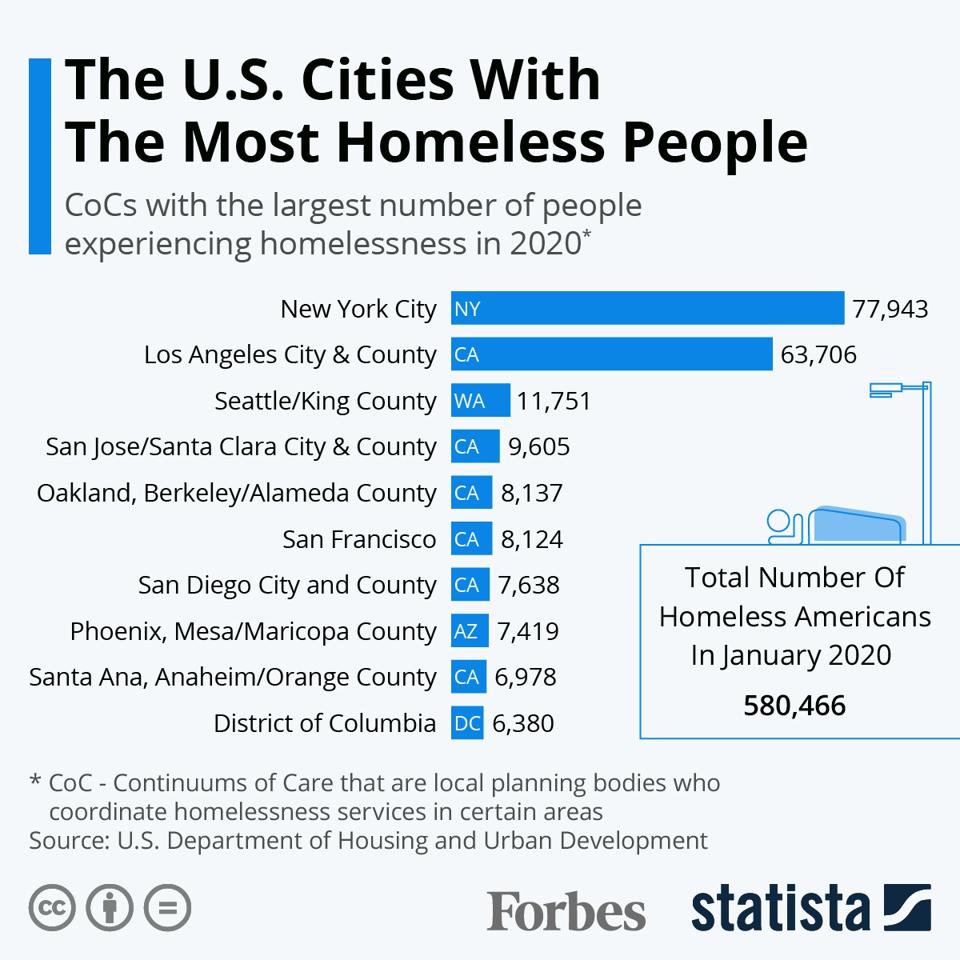
According to The U.S. Department of Housing and Urban Development 2020 Homeless Assessment Report, “580,466 people – about 18 of every 10,000 people in the United States – experienced homelessness across the United States.” In January of 2020, California had six out of the ten cities in the U.S. that experienced the most homelessness. San Diego Regional Task Force on Homeless reported that about half of San Diego’s homeless population (7,638 members) were unsheltered in 2020.
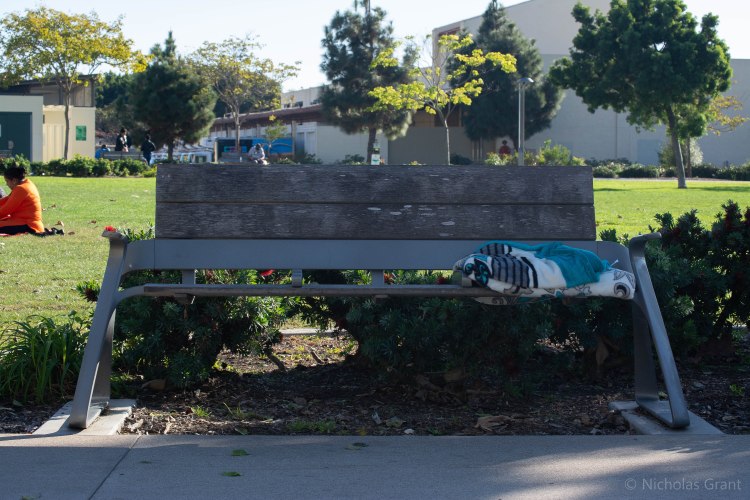
A blanket left for someone who needs it | ISO 400 FL 55mm f/9 SS 1/320sec | December 12th, 2021 San Diego Ca USA Photo by Nicholas Grant 
Larry sleeping upright | ISO 400 FL 70mm f/9 SS 1/250sec | December 12th, 2021 San Diego Ca USA Photo by Nicholas Grant 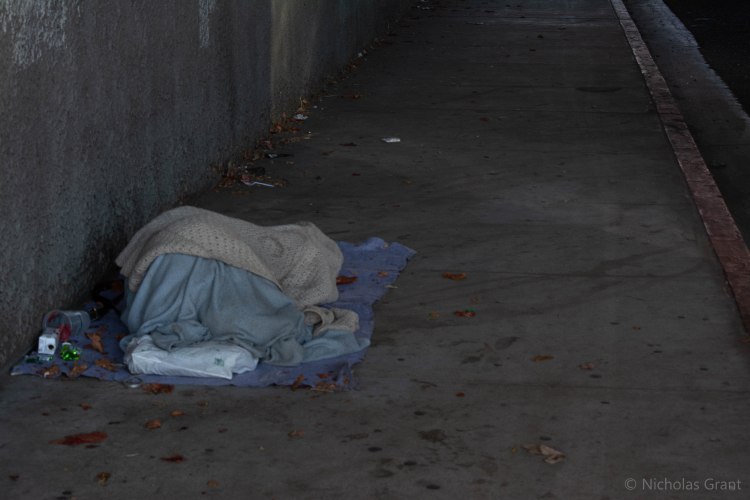
Underneath a highway overhang | ISO 400 FL 55mm f/9 SS 1/125 sec | November 21st, 2021 San Diego Ca USA Photo by Nicholas Grant 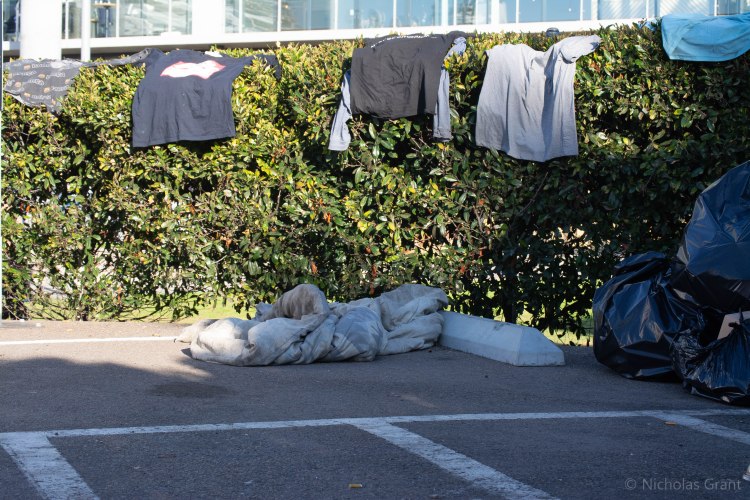
More than just a corner parking lot | ISO 400 FL 55mm f/9 SS 1/320sec | December 12th, 2021 San Diego Ca USA Photo by Nicholas Grant 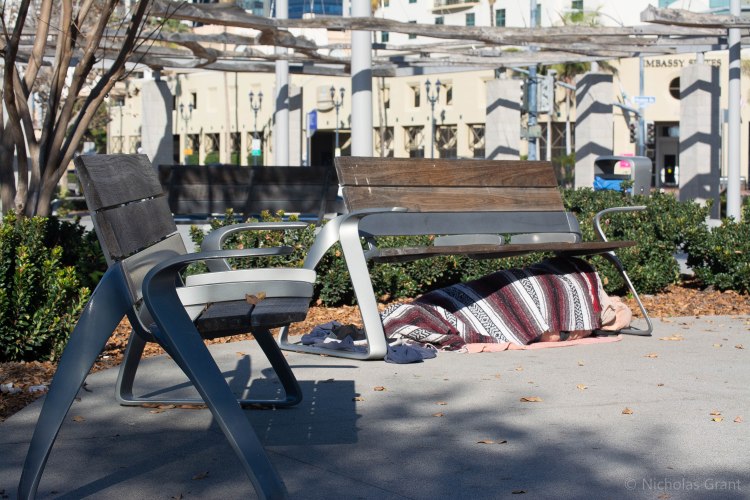
Finding shade on a hot day | ISO 400 FL 55mm f/9 SS 1/1000sec | December 12th, 2021 San Diego Ca USA Photo by Nicholas Grant 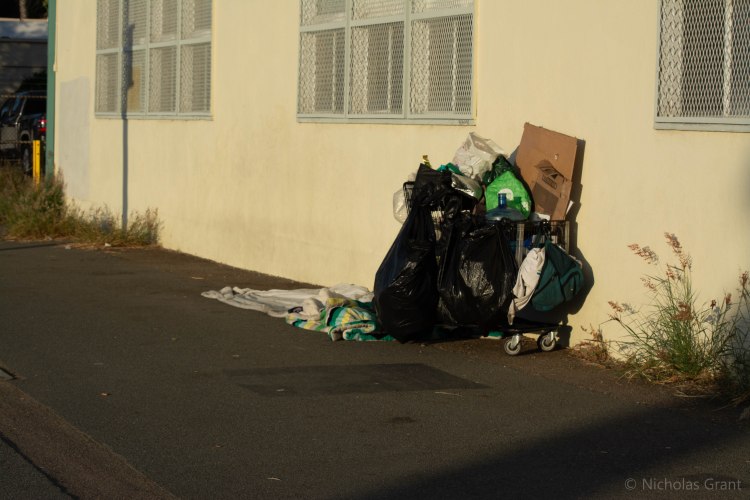
A nice spot for the night | ISO 100 FL 80mm f/9 SS 1/160sec | December 9th, 2021 San Diego Ca USA Photo by Nicholas Grant 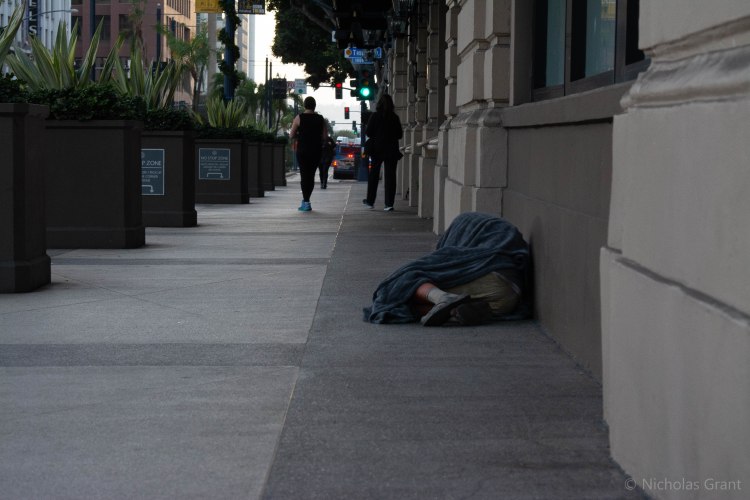
Peacefully flat one | ISO 100 FL 80mm f/9 SS 1/160sec | December 9th, 2021 San Diego Ca USA Photo by Nicholas Grant 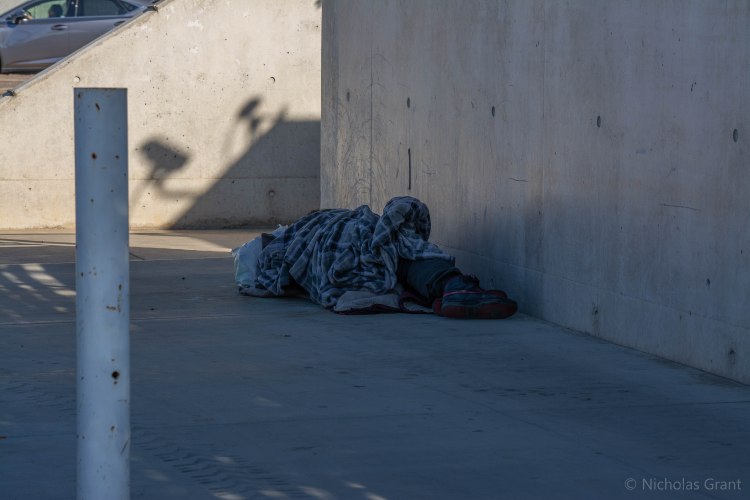
Peacefully flat two | ISO 100 FL 80mm f/9 SS 1/160sec | November 21st, 2021 San Diego Ca USA Photo by Nicholas Grant 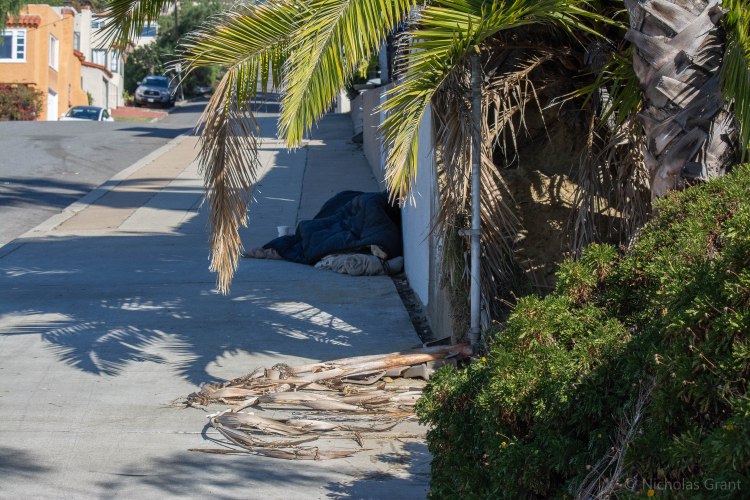
Normal for an Old Town neighborhood | ISO 400 FL 55mm f/9 SS 1/500 sec | November 21st, 2021 San Diego Ca USA Photo by Nicholas Grant 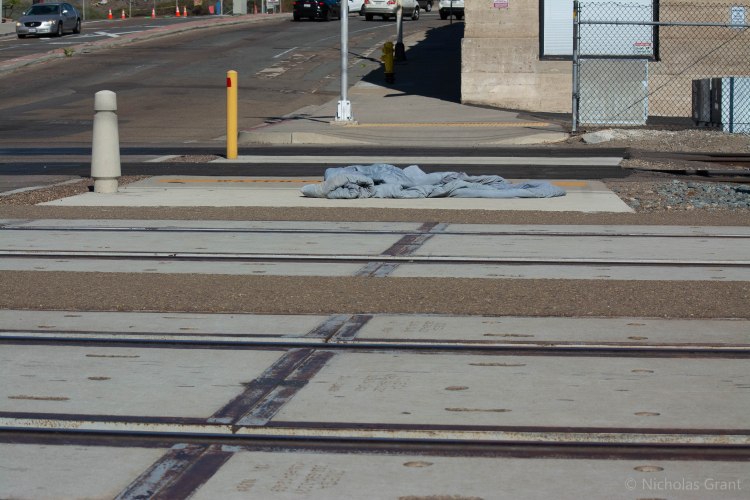
The comforter that is Tom’s bed | ISO 400 FL 55mm f/9 SS 1/2000 sec | November 21st, 2021 San Diego Ca USA Photo by Nicholas Grant
Things to know
Throughout California, handwashing stations and porta potties are spaced throughout cities to help the homeless combat Covid-19 and care for personal hygiene. Here is a map to find all available public bathrooms and wash stations in San Diego. Not all are adequately equipped or refilled with soap, toilet paper, or napkins. So bring some to drop off to local facilities.
People may become homeless for numerous reasons. Unfortunately, there are many misconceptions about the homeless community, and these stereotypes affect how the homeless are treated. New York University, the State of Washington Department of Commerce, and the Council For The Homeless have unraveled the most common myths about the homeless. Click on either of them to get directed to their articles. You’ll learn that the homeless aren’t different from anybody else, and the misconceptions that they are dangerous, criminals, or uneducated are false.
Reflection
Experience:
After volunteering at food banks and shelters, I got to know the homeless population in my childhood community. I was fortunate to grow up with parents who never perpetuated the stereotypes or misconceptions the homeless face. Now I spend time talking to homeless members in my new community when I see them at the beach, downtown, parks, or in front of stores. I feel comfortable around them, and they usually are nicer than the average Joe. So when my peers and friends told me this project was dangerous and rattled off the typical misconceptions, I started to get mad, but I also saw the need to tell their story through my photos.
I enjoyed this project as it forced me to grow both as a photographer and a person. I found this assignment to be difficult, and I ended up redoing it. After my second attempt, I am pretty content with the results. I saw significant growth as a photographer during this narrative project. I struggled at first to find a narrow theme and story, but with help and guidance, I was able to. Overall, I am happy with how it turned out and my photos’ story.
Learning:
My biggest takeaway came from both my first and second attempts, and that was learning how a series of photos can create a story. I struggled with choosing a narrow enough story until I landed on San Diego’s homeless members’ sleeping spaces. At first, I tried to capture all that was happening in SD’s homeless community, but that was too broad and didn’t tell a story. I’ve learned that focusing on a singular theme helps cast your story and tightens together your collection. This wasn’t easy because I’d take a photo or meet someone I’d like, but if it didn’t fit into the story, then I had to toss it out. As I put my final narrative project together, I began to see a narrow theme’s effect.
Future Applications:
One of the days, I spent 6 hours outside, on my feet, and walked over 11 miles during one of the days photographing. I didn’t bring water, sunscreen, or a phone charger, which was a massive mistake. The next time I plan to photograph outside all day, I will make sure I bring along the essentials. Most importantly, I will try to narrow down my vision for the following collection or project I do so I have a specific theme. I am excited to figure out what I will photograph up next!
 Nick Grant Media Portfolio